9 Best Reverse Camera for Caravan (November 2026)
The best reverse cameras for caravan towing include the Misakomo Rear View Backup Camera Compatible for factory-tailgate swaps, the DVKNM 2 Magnetic Solar Wireless Backup Camera for hitch-up on the go, and the DALLUX Bus Truck Vehicle Backup Cameras Wide for a universal rear mount.
On this page (8 sections)
- The reverse cameras that suit caravan towing best
- How these caravan reverse cameras compare
- How we chose these reverse cameras
- Does a caravan need its own rear camera?
- Wired or wireless: which works on a caravan?
- How to power a camera on the caravan
- What to check before you mount a caravan camera
- Which reverse camera should you buy for your caravan?
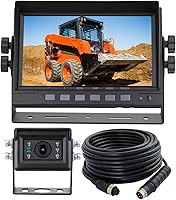
The best reverse camera for caravan towing for most people is the Misakomo Rear View Backup Camera, which drops straight into the factory camera spot on a Chrysler Town & Country or Dodge Grand Caravan. Pick the DALLUX if you need a universal rear mount, the DVKNM if you want a magnetic kit for quick hitching, or the Yakry if a wired signal matters more than metalwork.
A caravan setup asks a different question from a normal reversing camera. You're not just parking the car, you're lining up a hitch and then watching a long trailer behind you.
That splits buyers into two camps: the ones who tow with a Grand Caravan and want the original camera replaced, and the ones who need a camera that fits any tow vehicle.
This guide covers both. It compares a factory-fit swap, universal rear cameras, wired kits and solar magnetic cameras, then explains which parts of the spec actually change your day at the campsite.
Our picks at a glance
-
1
 Best for factory-tailgate swaps
Misakomo Rear View Backup Camera Compatible
9.6/10 our score
See it on Amazon -
2
 Best for hitch-up on the go
DVKNM 2 Magnetic Solar Wireless Backup Camera
9.3/10 our score
See it on Amazon -
3
 Best for a universal rear mount
DALLUX Bus Truck Vehicle Backup Cameras Wide
9.1/10 our score
See it on Amazon
- 4
 Check it
Yakry 7-Inch Plug and Play Wired RV Backup Camera
Best for a drop-free signal - 5
 Check it
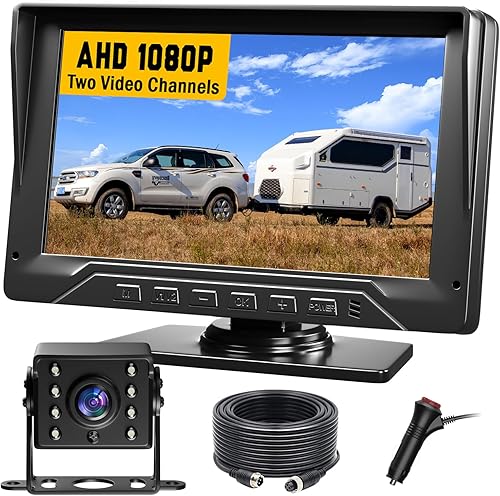
FEISIKE RV Backup Camera System
Best for rear camera plus monitor on a budget - 6
 Check it
EWAY WiFi Magnetic Hitch Backup Camera
Best for moving between trailers - 7
 Check it
nuoenx 7-Inch Wireless Backup Camera System for RVs and Trucks
Best for a no-drill RV monitor - 8
 Check it
Thybro 1080P Strong Magnetic Wireless Trailer Camera
Best for long battery life on a long trailer - 9
 Check it
DoHonest Solar Magnetic Wireless Hitch Backup Camera
Best for cutting glare at night
The reverse cameras that suit caravan towing best
The Misakomo is the clear pick for Grand Caravan owners who want a clean factory look, while the magnetic and universal cameras cover everyone else with a different tow car. Work out where you need the view first, then match the camera to that spot.
Misakomo Rear View Backup Camera Compatible: Best for factory-tailgate swaps
- 170° wide angle
- HD night vision
- Replaces 4672639AA and CH1960103
- Curved guidelines that track the steering wheel
An exact-fit replacement camera for the Grand Caravan and Town & Country that keeps the original mounting point and adds a wide, clear rear view.
Pros
- Drops into the factory camera position
- 170° view angle
- Guidelines curve with the steering wheel
Cons
- Only fits the two named vans
- Not a view over a trailer
This camera suits a Dodge Grand Caravan or Chrysler Town & Country owner who wants the factory camera position back without a dealer visit. It's built to replace part numbers 4672639AA and CH1960103, so the housing and wiring match what came out.
The 170° lens sees more of the ground behind the bumper than a standard camera. Its curved white guidelines follow the steering wheel, which helps when you line the tow ball up.
It also covers the Town & Country Touring and Limited and the Grand Caravan SXT and GT trims across both vans, so you can confirm your model before ordering. Night vision uses a glass-plastic hybrid lens in a reinforced ABS housing.
The trade-off is obvious: this camera only fits those two vans. If you tow with a pickup or a large SUV, the DALLUX or a magnetic kit is the better buy.
DVKNM 2 Magnetic Solar Wireless Backup Camera: Best for hitch-up on the go
- 7-inch 1080P IPS monitor
- Two magnetic cameras
- Solar plus USB-C charging
- 9600 mAh battery
- DVR loop recording
A two-camera magnetic kit with a big screen, solar top-ups and built-in recording, so you can spot the hitch and then keep an eye down the trailer.
Pros
- Two cameras in the box
- Magnetic base, no drilling
- DVR loop recording to a memory card
Cons
- Magnet needs a metal mounting surface
- Higher cost than a single camera
For hitching on your own, the DVKNM kit is the strongest pickup here. Two magnetic cameras snap onto any metal surface, and each can be moved from car to caravan in seconds.
That means one camera on the tailgate for the hitch and the other on the caravan's rear for the road. The 7-inch 1080P IPS monitor is the biggest screen on this list, and the 9600 mAh battery tops up from its solar panel or a USB-C cable.
Built-in DVR loop recording keeps a rolling clip on a memory card you supply. The digital signal reaches up to 328 ft in open air, and the kit includes an enhanced antenna for weak spots.
The trade-off against the DALLUX is price and the need for metal to mount on. It also costs more than a single wired camera.
DALLUX Bus Truck Vehicle Backup Cameras Wide: Best for a universal rear mount
- 1/3-inch color CCD, 800 TVL
- 130° viewing angle
- IP69K rated
- 18 infrared lights
- 4-pin connector
A rugged metal-bodied camera for trucks, caravans and RVs that need a universal rear mount and a clear night view.
Pros
- IP69K waterproofing
- Night vision to 50 ft
- Bracket rotates for top or bottom mount
Cons
- Runs on a 4-pin cable, not a wireless link
- Extension cable not included
The DALLUX is the pick when your tow car isn't a minivan and you want a camera you can bolt on once and forget. Its zinc metal case and stainless steel screws hold up to road salt, and the IP69K rating is the highest waterproofing class, so a rainy return trip is no worry.
Eighteen infrared lights give a view to 50 ft in darkness, which matters when you back a caravan into a pitch after dark. The 1/3-inch CCD sensor puts out 976×576 pixels through a six-layer glass lens for natural color.
The bracket rotates, so you can mount top or bottom to suit your vehicle. Its 130° view is narrower than the Misakomo and Thybro, so it shows less of the bumper corners.
Remember it takes a 4-pin video cable, and the extension cable isn't in the box.
Yakry 7-Inch Plug and Play Wired RV Backup Camera: Best for a drop-free signal
- 7-inch IPS monitor
- 66 ft cable
- 150° non-fisheye lens
- Image flip and parking lines
- Two video inputs
A wired kit that runs one cable to the camera, so the picture never cuts out on the road, with a large monitor and a second camera input.
Pros
- Stable wired signal
- Big 7-inch screen with sunshade
- Second camera can be added
Cons
- Cable run takes longer than a magnetic mount
- 66 ft may not reach the rear of a long van
Wireless cameras can flicker when the caravan blocks the signal, and the Yakry fixes that with a wire. One cable runs from the camera to the monitor, so the picture can't drop out on a mountain road.
The 7-inch IPS screen holds its color from an angle and comes with a sunshade for glare. Image flip lets you switch to mirror view, and parking lines help when you line up the hitch.
The camera runs one power feed, so you don't have to wire the monitor and the camera separately. The system is rated for a second camera on input V2, so you can add a front or side view later.
Its trade-off is fitting time: a 66 ft cable needs routing along the chassis. That's a weekend job, not a five-minute one.
FEISIKE RV Backup Camera System: Best for rear camera plus monitor on a budget
- 7-inch 1080P monitor
- 66 ft cable
- 150° wide angle
- LED night vision
- IP69 waterproof
A plug-and-play wired system with a big screen and weatherproof camera, priced lower than the Yakry without the IPS panel.
Pros
- Two camera inputs
- IP69 waterproof camera
- Sunshade on the monitor
Cons
- Wired, so plan the cable route
- Lower score than the Yakry kit
FEISIKE offers the same wired idea as the Yakry for less money, with a 1080P monitor and a 66 ft cable. The camera is IP69 waterproof and adds LED lights that switch on in low light.
Two camera inputs and adjustable guidelines cover the basics, and the monitor's sun visor helps in bright sun.
Because the whole kit runs on one 12 V feed, fitting is just a matter of running the cable and plugging the monitor into the lighter socket. It suits a buyer who wants a stable rear view without paying top dollar for an IPS panel.
The picture is good but the Yakry edges it on screen quality, which is why it scores lower. If cable routing puts you off entirely, look at the magnetic kits instead.
EWAY WiFi Magnetic Hitch Backup Camera: Best for moving between trailers
- 5-inch 1080P monitor
- 100 ft wireless range
- 4 magnets with 15 lb pull
- IP68 rating
- Adjustable guidelines
A battery-powered magnetic camera on a 5-inch screen, handy when one camera has to serve several trailers or a boat.
Pros
- Truly wireless, no cable
- Moves from trailer to trailer
- Adjustable guideline overlay
Cons
- Smaller 5-inch screen
- Battery camera needs charging
If one camera has to serve a caravan, a boat trailer and a horsebox, the EWAY is the practical choice. Four magnets with 15 lb of pull each hold it on any flat metal surface, and the whole kit moves between vehicles with no wiring.
The 5-inch monitor is smaller than the DVKNM's, but it splits the screen for a second camera. Range reaches 100 ft in open air, and EWAY recommends using it within 60 ft of the monitor.
The IP68 rating survives a dunk in shallow water. The trade-offs are the small screen and a battery that needs charging.
It's a monitoring camera first and a reversing aid second.
nuoenx 7-Inch Wireless Backup Camera System for RVs and Trucks: Best for a no-drill RV monitor
- 7-inch monitor
- 2.4G digital wireless
- 152° view
- 18 IR LEDs
- Suction cup and bracket mounts
A wireless RV system with a suction-cup monitor and a camera that can run off the running light for constant rear view.
Pros
- Monitor on windshield or dash
- Camera can stay on as a mirror
- Two camera support
Cons
- Wireless range drops inside a long vehicle
- Second camera not included
The nuoenx suits an RV or caravan owner who wants the monitor off the dash. Its suction cup holds the 7-inch screen on the windshield, or a bracket mounts it lower.
The camera can take power from the running light for a constant rear view or from the reverse light for reversing only. A 152° view and 18 infrared LEDs give a clear image at night.
The kit handles a 12 V to 24 V supply and temperatures from -4°F to 176°F, so it copes with cold mornings and hot forecourts. Wireless range is over 300 ft in open air but drops to about 50 ft on the vehicle, so it suits a smaller rig better than a long caravan.
It scores lower than the DVKNM on rating and features.
Thybro 1080P Strong Magnetic Wireless Trailer Camera: Best for long battery life on a long trailer
- 170° view
- 1080P CMOS sensor
- NdFeB magnet, 50 lb pull
- 15000 mAh battery
- 5.8GHz wireless
A big-battery magnetic camera with a very wide 170° lens, built for 40-ft trailers towed at highway speed.
Pros
- 170° view angle
- Long battery life between charges
- Strong magnetic hold
Cons
- Higher price than smaller magnetic kits
- Lower score than the DVKNM kit
Thybro built this for long trailers. A 15000 mAh battery with solar and USB-C charging runs for hours, and the 5.8GHz link is rated stable up to 56 ft, even on a 40-ft trailer at highway speed.
The 170° lens is the widest here and the NdFeB magnet holds 50 lb. A rubber base protects paint.
The kit arrives pre-paired with a 7-inch touch-key monitor, so a full setup is in the box. It scores lower than the DVKNM because the two-camera package and DVR recording on that kit cover more jobs.
Choose Thybro if battery life and a wide angle matter most.
DoHonest Solar Magnetic Wireless Hitch Backup Camera: Best for cutting glare at night
- 5-inch IPS monitor
- 9600 mAh battery
- 6 neodymium magnets
- 16 IR LEDs
- Sleep mode after 10 seconds
A small magnetic kit with a glare-cutting night sensor and sleep mode, but the short wireless range limits it to smaller rigs.
Pros
- Low-glare night image
- Sleep mode saves battery
- Scratch-proof rubber base
Cons
- 36 ft range is the shortest here
- 5-inch screen
DoHonest targets buyers who reverse after dark. Its 16 infrared LEDs and auto light sensor cut glare so you see a truer night image, and six neodymium magnets hold the camera on the tow bar or tailgate.
The 9600 mAh battery runs up to 24 hours on a charge, and a 5W solar panel tops it up. Sleep mode kicks in about 10 seconds after you switch off.
The 2.4GHz link uses frequency hopping to hold its picture, and the 5-inch IPS screen mounts on the windshield or the dash. All that suits a small caravan or a camper trailer.
Its 36 ft range is the shortest in this group, so it struggles with a long van. It's the cheapest way into solar magnetic towing, which is why it scores lowest.
How these caravan reverse cameras compare
The table lines up connection type, screen size and view angle so you can see why the magnetic kits win on fitting and the wired kits win on signal. Read across the row for the camera that matches your tow vehicle.
Our score weighs specs, features and buyer feedback against what you're shopping for, and it favours cameras that solve the hitching job with the least fuss.
| Product | Best for | Connection | View angle | Fits | Our score |
|---|---|---|---|---|---|
| Misakomo Rear View Backup Camera Compatible | factory-tailgate swaps | RCA | 170 degrees | Chrysler Town & Country 2011-2016; Dodge Grand Caravan 2011-2020 | 9.6 |
| DVKNM 2 Magnetic Solar Wireless Backup Camera | hitch-up on the go | Wireless | 9.3 | ||
| DALLUX Bus Truck Vehicle Backup Cameras Wide | a universal rear mount | 4-pin video | 130 degrees | 9.1 | |
| Yakry 7-Inch Plug and Play Wired RV Backup Camera | a drop-free signal | Wired, 66 ft cable | 150 degrees | 8.3 | |
| FEISIKE RV Backup Camera System | rear camera plus monitor on a budget | Wired, 66 ft cable | 150 degrees | 7.9 | |
| EWAY WiFi Magnetic Hitch Backup Camera | moving between trailers | Wireless | 7.8 | ||
| nuoenx 7-Inch Wireless Backup Camera System for RVs and Trucks | a no-drill RV monitor | Wireless | 7.5 | ||
| Thybro 1080P Strong Magnetic Wireless Trailer Camera | long battery life on a long trailer | Wireless, 5.8GHz | 170 degrees | 7.4 | |
| DoHonest Solar Magnetic Wireless Hitch Backup Camera | cutting glare at night | Wireless 2.4GHz | 6.8 |
How we chose these reverse cameras
We compared the specs that decide a caravan camera: view angle, waterproof rating, connection type, screen size and battery or cable reach. A 170° lens shows more of the trailer corners than a 130° one, and a wireless range of 36 ft rules out a long twin-axle van.
Wired kits scored well when they included a long enough cable and a large monitor. Magnetic kits scored on how fast they fit and how many cameras come in the box.
Solar and battery figures decided the order among the cordless picks, and we kept every product to one score across the site. Waterproofing carried real weight too: an IP69K camera handles a jet wash and heavy rain better than an IP68 one, which matters more on a caravan than on a car that lives in a garage.
The result is a list that runs from a factory-fit swap down to a budget solar kit. The best reverse camera for caravan towing is the one that fits your tow car and your hitching routine, not simply the widest lens.
Does a caravan need its own rear camera?
Yes, if you want to see traffic behind the trailer, and no, if the car's camera already covers the hitch. The car's tailgate camera shows the tow ball, which is what you need for hitching.
A caravan's rear camera shows the road behind the whole outfit, which helps when you change lanes, reverse into a pitch or pull out of a junction.
Two cameras give you both views, which is where the DVKNM kit with two magnetic cameras earns its score. One sits on the tailgate for the hitch, the other on the caravan's rear panel for the road.
A monitor with two inputs, like the Yakry or FEISIKE, does the same job with one camera added later.
If you own a Grand Caravan, the factory camera already covers the hitch, so you may only need to add a caravan rear view. That's why the Misakomo swap and a separate caravan camera work well together.
When one camera is enough
A single camera on the caravan's rear suits a driver who hitches with a helper or a reversing aid. Mount it high on the rear panel, aimed slightly down, so it shows the ground behind the bumper and a slice of the road.
For a short van, a camera on the car's tailgate pointed at the hitch also does the job alone.
When two cameras pay off
Two cameras suit a solo driver who tows a long van, or anyone who reverses into tight pitches often. Look for a monitor with two video inputs, such as the Yakry, FEISIKE or nuoenx, or a kit that ships with two cameras like the DVKNM.
One camera for the hitch and one for the road means you never have to move a camera mid-journey.
Wired or wireless: which works on a caravan?
Wired wins on signal and wireless wins on fitting time. A cable can't drop out, so it suits a long caravan and a driver who wants a steady picture.
A wireless link saves hours of routing, but range drops when the trailer body blocks the signal. The Yakry and FEISIKE each run a single power feed to the monitor and camera, so there's no separate pairing step.
The wired Yakry and FEISIKE kits each include a 66 ft cable. That's enough for most caravans, but measure the route along the chassis before you buy for a long twin-axle van.
If a 66 ft run won't reach, a wireless kit or a magnetic camera is the simpler answer. A camera-only kit like the DALLUX also needs an extension cable, which is sold separately.
For a full comparison of cordless systems, see our guide to the best wireless backup camera for trailer towing. It covers range, battery life and monitor choice in more depth.
The fitting job for a wired camera
Route the cable under the caravan floor, tuck it away from moving suspension parts, and seal any hole through a panel. Then wire the camera's power to a live feed and run the video cable to the monitor.
That's a half-day job for most vans. A kit with a sunshade and image flip makes the result easier to live with once the cable is in.
The fitting job for a magnetic camera
Snap the camera onto a metal surface, plug the monitor into the cigarette lighter, and pair them. That's minutes, not hours.
The catch is that you need bare metal at the mounting spot, so a plastic bumper needs a small steel plate stuck on first. A strong magnet like the 50 lb pull on the Thybro or the four 15 lb magnets on the EWAY keeps the camera steady once it's placed.
How to power a camera on the caravan
Tap the caravan's tail light circuit for a camera that stays on as a rear-view mirror, or the reverse light for one that works only while reversing. Both feed from the caravan's own 12 V system, so no long cable back to the car.
Our guide on how to hook up backup camera to reverse lights walks through the splice and the tester check.
A constant feed is better for towing because you can glance at the trailer while driving. A reverse-only feed saves battery on a cordless camera and keeps the screen dark in normal driving.
Pick based on whether you want a rear-view mirror or a reversing aid. On a solar kit, a reverse-only feed also means the panel has less work to do.
Tapping the reverse light
This suits a camera you only want while backing up. Find the reverse light wire in the caravan's tail cluster, test it with the car in reverse, and splice in the camera's power lead.
The camera wakes with the gear and shuts off after. That keeps a battery camera's charge for the moments that matter.
Tapping the running light
This suits a camera that acts as a mirror. Splice into the tail or running light wire, so the camera powers up when you switch the lights on.
That keeps the rear view live for the whole journey and suits a wired or solar camera that can run for hours. The nuoenx kit is built around this option.
What to check before you mount a caravan camera
Check the mounting spot, the wireless range for your van's length, and the screen size you can see from the driver's seat. Those three points decide whether a camera is useful or just another gadget in the glovebox.
Wireless range is the one most buyers get wrong. A 36 ft kit suits a small camper trailer, not a 20-ft caravan.
Match the range figure to your van's length and keep the receiver high and forward to reduce blocking. If you need more reach, an extension antenna can help on some kits.
Screen size is a comfort choice. A 7-inch monitor is easy to read at a glance in traffic, while a 5-inch screen takes less dash space.
Neither is wrong, but the bigger screen suits a driver who checks it often. An IPS panel holds its color from an angle, which matters if the monitor sits to one side of the dash.
Angle matters on the caravan. A 170° lens shows the bumper corners, while a 130° camera shows a narrower strip.
The Misakomo, Thybro and DoHonest sit at 170°, the DALLUX at 130°, and the rest in between. Wider isn't always better for hitching because it bends the image at the edges.
A non-fisheye lens like the Yakry's 150° keeps straight lines straighter.
If you're fitting a camera for the first time, our walkthrough on how to add backup camera to travel trailer covers the bracket, the cable route and the power tap step by step.
Use this checklist as a whole:
- Measure the van's length and match it to a wireless range or cable length.
- Confirm a metal mounting spot for a magnetic camera, or a firm panel for a bracket.
- Choose the power tap, either the reverse light or the running light.
- Check the mirror setting so the image matches a rear-view mirror.
- Confirm the connector on a camera-only kit matches your monitor cable.
When the image looks backwards after fitting, our guide on how to flip reverse camera image explains the menu setting most monitors share.
Which reverse camera should you buy for your caravan?
Buy the Misakomo if you tow with a Chrysler Town & Country or Dodge Grand Caravan, because it restores the factory camera with a wide 170° lens and a clean fit. For a universal rear mount on any other tow car, take the DALLUX.
For solo hitching and a view down the trailer, the two-camera DVKNM kit is the best reverse camera for caravan trips where you want screens and solar in one box.
The wired Yakry suits a long van that can take a 66 ft cable, and the FEISIKE does the same for less. Pick a magnetic camera like the EWAY or Thybro when one camera has to serve several trailers, and the DoHonest only for a short trailer on a budget.
For a small rig that needs an easy windshield monitor, the nuoenx fills the gap.
Whichever you choose, set it up for the job you do most. A camera aimed at the hitch makes hitching easy, and a camera aimed down the road makes towing calm.
Match the mount, the range and the power tap to your caravan, and the reversing camera pays you back every time you back into a pitch.
Our top 3 picks at a glance
-
1
Best for factory-tailgate swaps
Misakomo Rear View Backup Camera Compatible
9.6/10 our score
See it on Amazon -
2
Best for hitch-up on the go
DVKNM 2 Magnetic Solar Wireless Backup Camera
9.3/10 our score
See it on Amazon -
3
Best for a universal rear mount
DALLUX Bus Truck Vehicle Backup Cameras Wide
9.1/10 our score
See it on Amazon
Frequently asked questions
Do I need a camera on the caravan as well as the car?
Not always. A camera on the car's tailgate covers the hitch, which is enough for hitching up and reversing into a pitch.
A camera on the caravan's rear adds a view of traffic behind the whole outfit, which helps on lane changes and tight sites.
Will a wireless camera work on a long caravan?
It depends on the distance and what blocks the signal. A 36 ft-rated kit suits a small caravan, while 100 ft systems handle longer outfits.
Keep the receiver as far forward and as high as possible, and avoid mounting the camera behind a metal panel that blocks the antenna.
What is the difference between a mirror image and a normal image?
A mirror image flips left and right so the screen matches your rear-view mirror, which is right for a reversing camera. A front or side camera usually wants the normal image.
Most monitors here switch between the two in the menu.
Can I use a wired camera on a caravan?
Yes, with a cable long enough to reach from the monitor to the rear of the caravan. The Yakry and FEISIKE kits include a 66 ft cable.
For a long twin-axle van, measure the route along the chassis before you commit to a wired kit.